
This soft and moist lemon loaf has to be one of my favourite. It’s incredibly easy to make and comes together with simple ingredients you may already have in your kitchen. One of the best things about this recipe is that you do not need an electric mixer. You just need bowls, a whisk, and a spoon to create it.

I love the combination of fresh lemon juice, and lemon zest……it just gives a loaf rich citrus taste in every bite. It is soft, buttery, moist, and perfectly balanced between sweet and tangy.
If you enjoy lemon desserts, lemon cakes, or anything baked with bright citrus flavour, this recipe is definitely for you. Whether served for breakfast, afternoon tea, dessert, or as a snack with coffee, this lemon loaf is simple recipe to go for.
- What Makes This Lemon Loaf Soft and Moist
- Choosing the Best Lemons for Lemon Loaf
- Ingredient you will need to make a perfect lemon loaf
- Why Room Temperature Ingredients Matter for this recipe
- Quick Tips for Bringing Ingredients to Room Temperature
- How to Avoid Overmixing the Lemon Loaf Batter
- Here are a few simple tips that help prevent overmixing Your Batter:
- What Causes Lemon Loaf to Sink in the Middle
- Here are a few tips for your loaf not to sink:
- Why Lemon Loaf Browns Too Quickly
- How Long Lemon Loaf Stays Fresh
What Makes This Lemon Loaf Soft and Moist
There are a few simple things that help this lemon loaf stay soft and moist instead of dry or heavy. It is not just one ingredient doing all the work, but it is the combination of ingredients and the way the batter is handled.
One of the biggest reasons this loaf has a soft texture is the use of buttermilk, plain yoghurt, and milk together. The yoghurt adds moisture and gives the loaf a tender crumb, while the buttermilk helps soften the gluten in the flour, which keeps the loaf from becoming tough.
The milk helps loosen the batter slightly so the texture stays balanced and not too thick.
Using both butter and oil also makes a big difference. Butter is known for adding flavor, while oil helps the loaf stay moist for longer. Sometimes cakes made with only butter can dry out faster after baking, but adding oil helps keep the loaf soft even next days.
Another important step is using room temperature ingredients. Cold eggs, yoghurt, or milk do not mix into the batter as smoothly, which can affect the texture of the loaf. Room temperature ingredients blend more evenly and help create a more consistent batter.
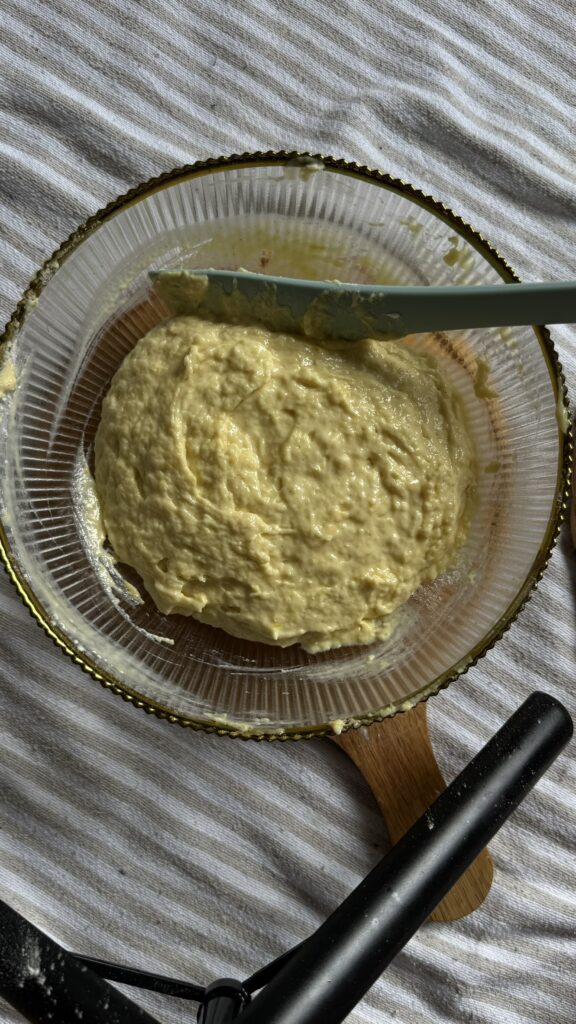
It is also important not to overmix the batter. Once the dry ingredients are added, mix gently until everything is combined. Overmixing develops too much gluten, which can make the loaf dense instead of soft. A few small lumps in the batter are completely fine.
Using the spatula will help you not to overmix your batter.
Choosing the Best Lemons for Lemon Loaf
Fresh lemons really make a difference in this lemon loaf recipe. I recommend using real lemons instead of bottled lemon juice because the flavor tastes cleaner and more natural. Bottled juice can sometimes taste sharp or slightly artificial, while fresh lemon gives lemon loaf a brighter flavor without overpowering it.
If possible, use organic lemons, especially since this recipe uses lemon zest. The zest holds a lot of the lemon flavor, and organic lemons are usually a better option when you are grating the skin directly into sugar. Just make sure to wash and dry them well before zesting.
I also like using the same lemons for both the zest and the juice so nothing goes to waste. Always zest the lemons first before cutting and squeezing them. It is much easier that way, and you get the most flavor from each lemon.
When choosing lemons, look for ones that feel slightly heavy for their size and have smooth skin. They tend to be juicier. If your lemons are firm, roll them on the counter with your hand before juicing to help release more juice.
One small tip that helps: avoid grating the white part underneath the skin when zesting. The yellow outer layer gives you the fresh lemon flavor, while the white part can taste bitter.
Ingredient you will need to make a perfect lemon loaf
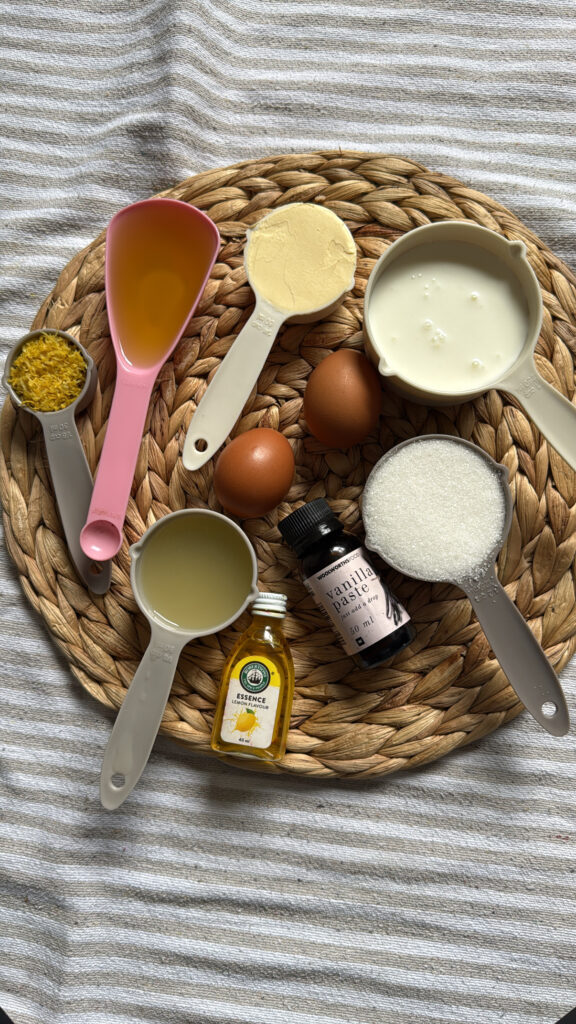
- Flour – We’re going to use cake flour, but you can use all-purpose flour as well. Make sure you measure flour using the correct tools such as measuring cups otherwise you may end up have more or less than needed.
- Baking soda and baking powder – They are both rising agent, but they do their own role to give a perfect lemon loaf. Baking powder rises your loaf, while baking soda reacts to other wet ingredients such as lemon juice, buttermilk, and yoghurt to give lighter texture.
- Granulated sugar – We’re going to use granulated sugar also known as white sugar to enhance the bright colour of lemon loaf. I would prefer to use brown sugar on cake that has dark colour such as carrot loaf.
- Lemon zest & lemon juice – These are what give the loaf its fresh lemon flavor. I would recommend that you use fresh lemons not bottled lemon juice.
- Butter and oil – For this lemon loaf you will use both butter and oil. Butter adds flavor, while oil helps keep the loaf soft and moist even after a day or two.
- Milk, buttermilk, and plain yoghurt – Yes, we’re going to use all three to balance the loaf texture.
- Vanilla Paste & Lemon Flavour – You can use vanilla extract instead of vanilla paste if that is what you have at home. I used lemon flavour just to enhance lemon taste
We’re going to use lemon glaze as a topping but I am going to add their ingredients in the recipe section.
Why Room Temperature Ingredients Matter for this recipe
One simple step that can completely change the texture of your lemon loaf is using room temperature ingredients. It may seem like a small step, but it helps the batter mix more evenly and gives the loaf a softer texture.
When cold ingredients are added straight from the fridge, they do not combine properly. Butter can stay lumpy, the batter may look split or curdled, and air does not incorporate as well during mixing. This can affect how your lemon loaf rises in the oven and the entire texture.
Room temperature butter creams more smoothly with sugar, helping create a lighter batter. Eggs also blend in better without causing the mixture to separate. Ingredients like yoghurt, milk, and buttermilk mix more evenly, which helps create a soft and moist lemon loaf.
Another reason this matters is baking consistency. When all the ingredients are close to the same temperature, the batter bakes more evenly from the center to the edges.
Quick Tips for Bringing Ingredients to Room Temperature
- Take your eggs, milk, yoghurt, and butter out about 1 hour before baking.
- If you forget, place eggs in warm water for 5–10 minutes. (NOT BOILING WATER)
- Cut butter into small cubes so it softens faster.
- Do not microwave butter until melted. Softened butter should still hold its shape. (10-15 seconds microwave will do the trick)
- Cold yoghurt and buttermilk can slightly firm up softened butter, so letting them be in room temperature first helps the batter stay smooth.
How to Avoid Overmixing the Lemon Loaf Batter
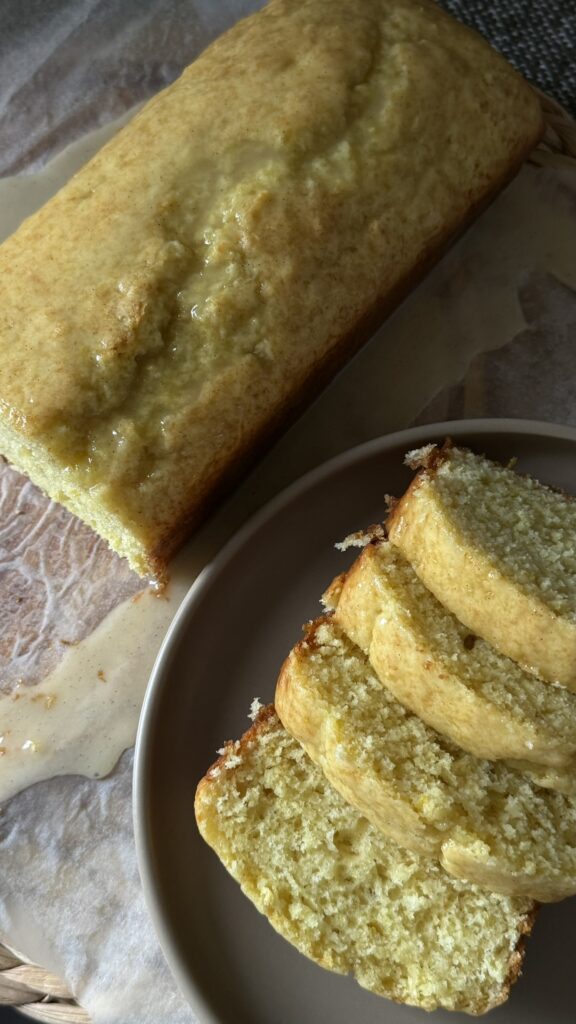
One of the easiest ways to ruin a lemon loaf is by overmixing the batter. It may not seem like a big deal, but the way you mix your ingredients directly affects the final texture of the loaf.
When flour is mixed with wet ingredients, gluten begins to develop. Gluten gives baked goods structure, but too much of it can make a lemon loaf dense, rubbery, or tough instead of soft and tender. This is why mixing technique matters just as much as the ingredients themselves.
A good rule is to mix the batter only until the flour disappears. Once you no longer see dry streaks of flour, stop mixing. The batter does not need to look perfectly smooth.
If you are a beginner, it is better to avoid using an electric mixer once the dry ingredients are added. Electric mixers work very fast, and it is easy to accidentally overmix without noticing. A spatula or whisk gives you more control and helps you mix the batter gently.
Another helpful tip is to fold the dry ingredients into the wet ingredients in stages instead of adding everything at once. This makes it easier to combine the batter without overworking it.
You should also avoid trying to “fix” lumps by continuing to stir for too long. Small lumps in lemon loaf batter are completely normal and usually bake out in the oven.
Here are a few simple tips that help prevent overmixing Your Batter:
- Use a spatula or whisk instead of an electric mixer
- Mix just until combined
- Fold gently rather than stirring aggressively
- Add dry ingredients in batches
- Stop mixing once the flour disappears
- Scrape the bowl instead of beating the batter longer
What Causes Lemon Loaf to Sink in the Middle
One of the most frustrating things when baking a loaf is pulling it out of the oven and seeing the center collapse. In most cases, it happens because the structure of the loaf did not fully bake before you open the oven.
A common reason is underbaking. Even if the top looks golden, the middle may still be wet. Lemon loaf contains ingredients like yoghurt, milk, buttermilk, oil, and lemon juice, which add moisture to the batter. That moisture is what gives the loaf a soft texture, but it also means the center needs enough time to bake properly.
Opening the oven too early can also cause sinking. During the first part of baking, the loaf is still rising and setting. Sudden temperature changes can make the center fall before it becomes stable. Try not to open the oven door too often, especially during the first 35 minutes.
Another cause is overmixing the batter. Once flour is added, mixing too much develops gluten, which can trap too much air or create an uneven texture. The loaf may rise quickly in the oven and then collapse as it cools.
Using too much raising agent can also lead to sinking. If there is too much baking powder or baking soda, the lemon loaf may rise too fast before the structure is strong enough to support it.
Here are a few tips for your loaf not to sink:
- Measure flour correctly using a spoon and level method
- Make sure your oven is fully preheated before baking
- Avoid opening the oven too early
- Test the center with a skewer before removing the loaf
- Mix the batter only until combined
- Use the correct loaf pan size
Why Lemon Loaf Browns Too Quickly
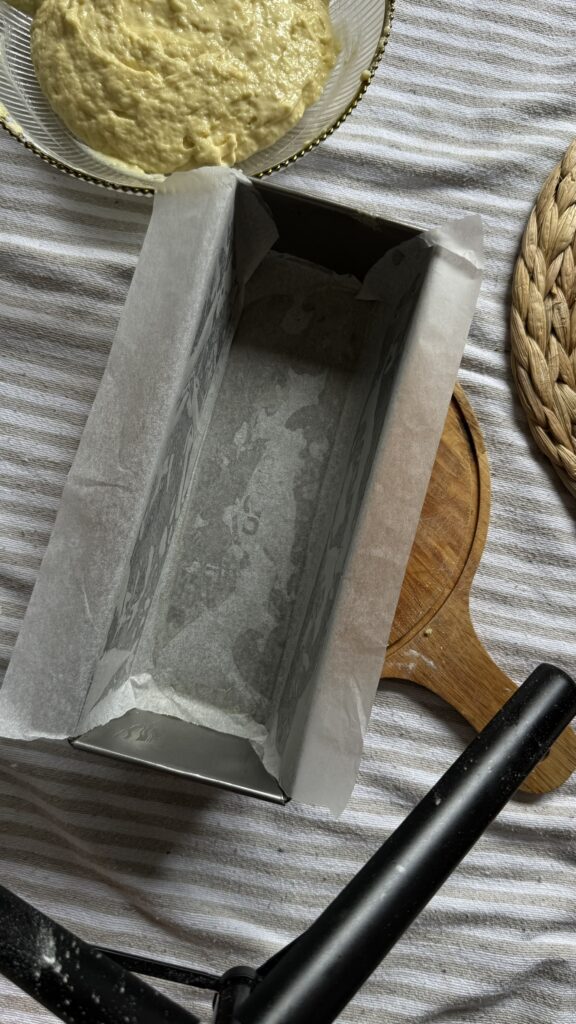
If your lemon loaf is browning too fast on top while the middle is still baking, the oven temperature is usually the first thing to check.
Many ovens run hotter than the temperature shown on the dial. Even an extra 10–15 degrees can cause the top to brown too quickly before the inside finishes baking. Lemon loaf batter also contains sugar, butter, and dairy, which naturally encourage browning.
The position of the loaf in the oven matters too. If the pan sits too close to the top heating element, the surface receives more direct heat and darkens faster.
Dark metal loaf pans can also bake hotter than lighter-colored pans. They absorb more heat, which speeds up browning around the edges and top.
To prevent this:
- Bake the lemon loaf on the middle oven rack
- Use an oven thermometer if possible
- Avoid baking at a higher temperature to “speed things up”
- If the top browns too early, loosely cover it with foil during the last part of baking
- Use a light-colored loaf pan for more even baking
How Long Lemon Loaf Stays Fresh
This lemon loaf stays fresh for about 3 to 4 days at room temperature when stored properly. After that, it may still taste good, but the texture slowly starts to change and becomes less soft.
If you want to keep it longer, you can refrigerate it for up to a week. Just make sure it is wrapped well so it does not absorb fridge smells or dry out.
For even longer storage, you can freeze the loaf for up to 2 months. I like slicing it before freezing because it makes it easier to thaw only what you need. Wrap the slices individually and place them in a freezer bag or airtight container.
If you try this lemon loaf, I’d really love to hear how it turned out for you. Leave a comment and share your thoughts, tips, or any changes you made to the recipe. Your reviews help other readers and also help me create better recipes for you.
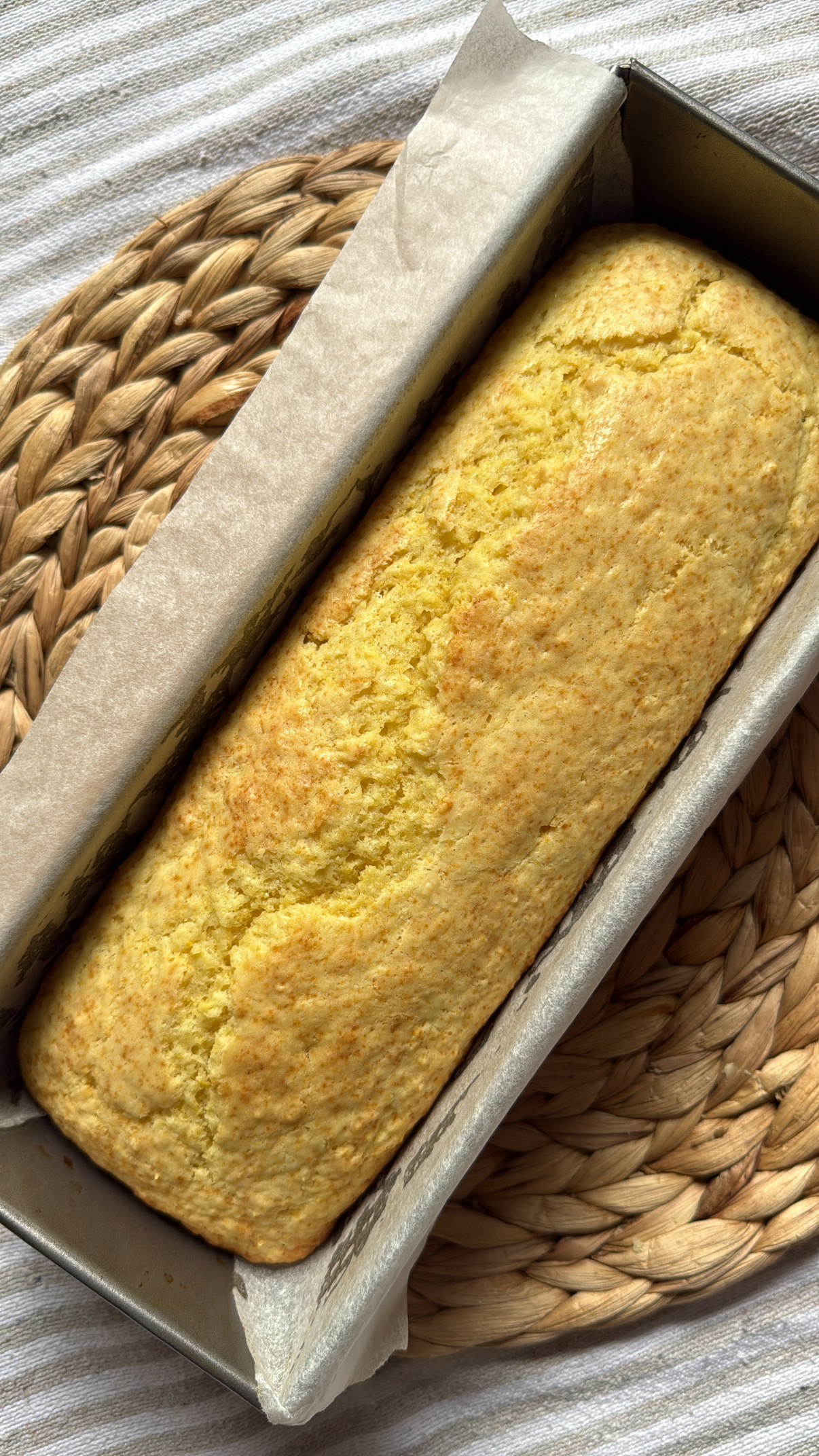

Glazed Lemon Loaf Recipe
Ingredients
Equipment
Method
- Preheat oven to 180°C and grease your loaf pan.
- In a bowl, mix flour, baking powder, baking soda, and salt. Set aside.
- In another bowl, add sugar and lemon zest. Rub together lightly to release flavour.
- Add butter and oil. Mix until combined.
- Add eggs one at a time and mix.
- Stir in yoghurt, buttermilk, milk, vanilla paste, lemon flavour, and lemon juice. Mix until smooth.
- Add dry ingredients into wet mixture. Mix just until no flour streaks remain. Do not overmix.
- Pour batter into loaf pan and level the top.
- Bake for 40-45 minutes or until a skewer comes out clean.
- Let the loaf cool in the pan for 10 minutes, then move to a cooling rack.
- Mix icing sugar, milk, vanilla extract, and lemon juice in a small bowl.
- Stir until smooth and pourable.
- Once the loaf is fully cooled, pour glaze over the top.
- Let it set before slicing.
Video
Discover more from WandileBakes
Subscribe to get the latest posts sent to your email.